
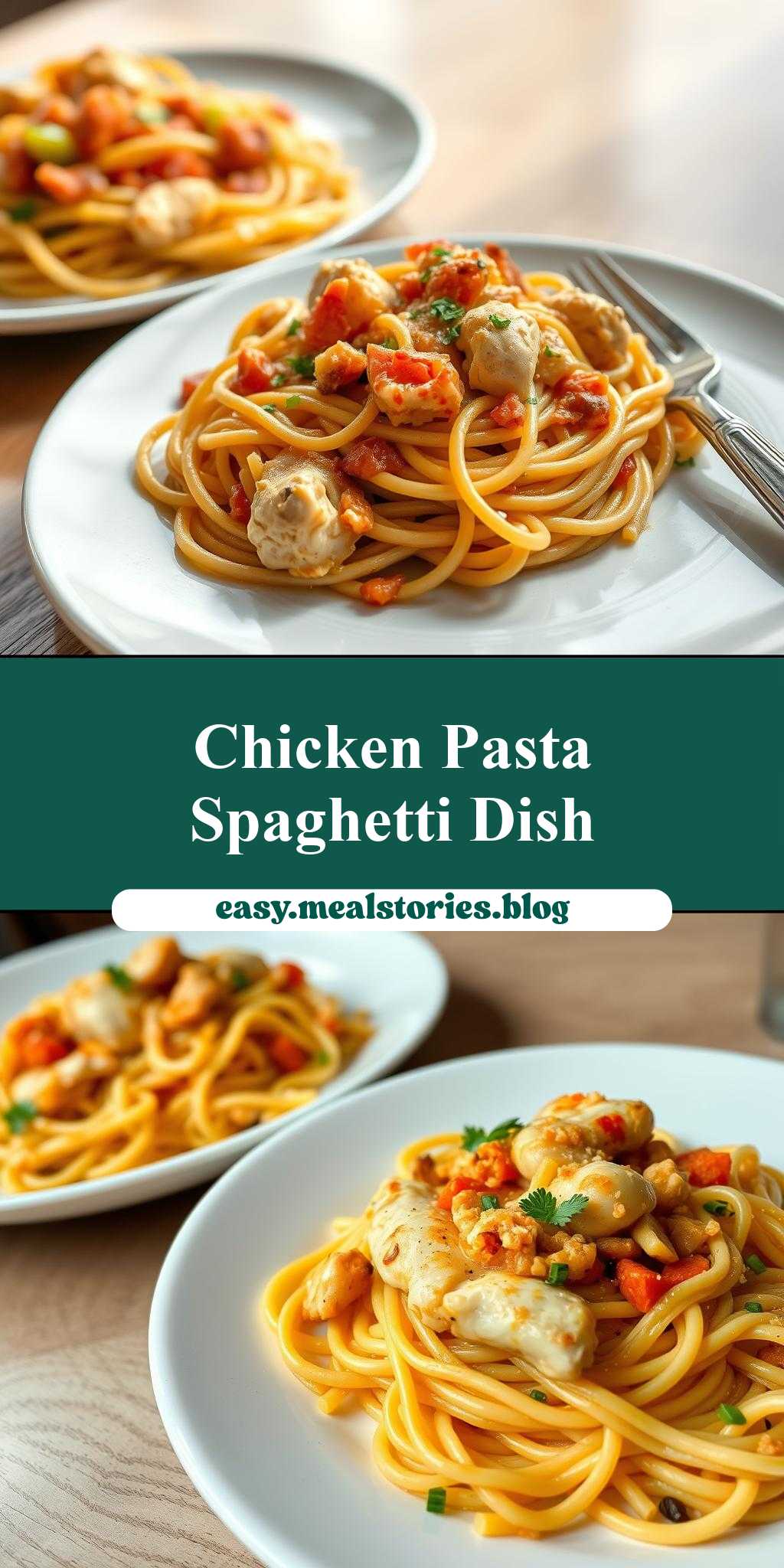
What’s the perfect comfort food to serve a crowd? This homemade spaghetti with chicken is a weeknight dinner winner, made easy with tender chicken and al dente pasta. Save this idea for a family favorite meal that’s sure to please, try it soon and enjoy the leftovers too, Pin for later
Two Plates of Spaghetti with Chicken and Pasta
Introduction
Imagine a dish that embodies the perfect blend of comfort food and gourmet flair, all while being incredibly easy to prepare. Look no further than a beautifully crafted plate of spaghetti with chicken and pasta, a culinary masterpiece that can be ready in no time. This recipe is a testament to the magic that happens when everyday ingredients are combined with a dash of creativity and a pinch of love. The tender chicken, the perfectly cooked spaghetti, and the rich flavors all come together to create a dish that is not only delicious but also visually appealing. Whether you’re a seasoned chef or a beginner in the kitchen, this recipe is sure to impress and satisfy your taste buds.
Why This Works
- Flavor balance and ingredient accessibility: This dish strikes a perfect balance between the savory taste of chicken, the slight sweetness of tomatoes, and the earthiness of herbs, all of which are readily available in most supermarkets.
- Ease of preparation: The beauty of this recipe lies in its simplicity. With a few straightforward steps, you can have a restaurant-quality meal on your table.
- Impressive results with minimal effort: Despite the ease of preparation, the presentation and flavors of this dish are sure to impress your family and friends, making it perfect for both casual dinners and special occasions.
Key Ingredients
The foundation of a great spaghetti with chicken and pasta dish starts with the quality of its ingredients. You will need:
– 1 pound of boneless, skinless chicken breasts, cut into bite-sized pieces. Chicken thighs can be used as a substitute for a richer flavor.
– 1 pound of spaghetti. While traditional spaghetti is preferred, you can experiment with whole wheat or gluten-free options for a healthier twist.
– 2 tablespoons of olive oil, which can be substituted with avocado oil for a different flavor profile.
– 1 onion, diced, and 3 cloves of garlic, minced, for added depth of flavor.
– 1 can of diced tomatoes (14.5 oz) or 2 cups of fresh tomatoes, diced, for the sauce.
– 1 cup of chicken broth, which can be homemade or store-bought.
– 1 teaspoon of dried basil and 1 teaspoon of dried oregano for the Italian seasoning.
– Salt and pepper, to taste.
– Grated Parmesan cheese, for serving. This can be substituted with other hard cheeses like Pecorino or Romano.
Instructions
- Step 1: Begin by preparing your ingredients. Chop the onion and mince the garlic. If using fresh tomatoes, dice them and set aside.
- Step 2: Cook the spaghetti in boiling, salted water until it’s al dente. Reserve 1 cup of pasta water before draining the spaghetti.
- Step 3: In a large skillet, heat the olive oil over medium heat. Add the chicken and cook until browned on all sides and cooked through. Remove the chicken from the skillet and set aside. In the same skillet, add the diced onion and cook until translucent, then add the minced garlic and cook for an additional minute.
- Step 4: Add the diced tomatoes, chicken broth, dried basil, dried oregano, salt, and pepper to the skillet. Stir well to combine. If using reserved pasta water, add it to the sauce to achieve the desired consistency. Return the chicken to the skillet and simmer the sauce for about 10 minutes, allowing the flavors to meld together.
Handy Tips
- Always use high-quality ingredients, especially the tomatoes, as they form the base of the sauce.
- Don’t overcook the spaghetti. Al dente texture is key to a good spaghetti dish.
- Experiment with different herbs and spices to give your dish a personal touch.
Heat Control
Maintaining the right heat is crucial, especially when cooking the chicken and simmering the sauce. For the chicken, a medium-high heat is ideal for browning, while a medium heat is better for cooking the sauce, allowing it to simmer gently and reduce slightly, intensifying the flavors.
Crunch Factor
The crunch factor in this dish can be achieved by adding some toasted breadcrumbs or grated vegetables on top of the spaghetti before serving. This adds a satisfying textural element to the dish. Additionally, using fresh herbs like parsley or basil as a garnish can provide a bright, fresh crunch.
Pro Kitchen Tricks
- Use a mixture of grated cheeses, including Parmesan and Mozzarella, for an extra creamy sauce.
- Add some acidity, like a squeeze of fresh lemon juice, to balance the richness of the dish.
- For a shortcut, use pre-cooked chicken or store-bought pasta sauce as a base and adjust the seasoning accordingly.
Storage Tips
- Leftover spaghetti with chicken can be stored in an airtight container in the refrigerator for up to 3 days. Reheat gently over low heat, adding a bit of water or broth if the sauce has thickened.
- For longer storage, consider freezing the dish. It’s best to freeze the chicken and sauce separately from the spaghetti for better texture upon reheating.
Gift Packaging Ideas
If you’re considering gifting this dish, perhaps for a potluck or as a care package, consider packaging it in a decorative, microwave-safe container. Add a sprinkle of Parmesan cheese on top and a few fresh basil leaves for garnish. Include a side of garlic bread or a green salad for a complete meal. Wrap the container in a colorful towel or place it in a gift basket filled with Italian treats for a thoughtful touch.
Flavor Variations
- Different spices: Experiment with red pepper flakes for a spicy kick or smoked paprika for a smoky flavor.
- Creative toppings: Add some sautéed mushrooms, bell peppers, or olives to the dish for added flavor and texture.
- Ingredient swaps: Use shrimp or sausage instead of chicken for a seafood or meat-lovers version.
Troubleshooting
- Texture problems: If the spaghetti is overcooked, it can become mushy. Conversely, undercooked spaghetti will be too hard. Adjust cooking time as needed.
- Ingredient replacements: If you don’t have chicken broth, you can substitute it with vegetable broth or even water as a last resort.
- Over/undercooking signs: Chicken should be cooked through and reach an internal temperature of 165°F. The sauce should simmer long enough to thicken slightly but not so long that it becomes too dry.
FAQs
- Can I freeze it? Yes, you can freeze the cooked spaghetti with chicken for up to 3 months. It’s best to freeze the components separately for easier reheating.
- Is it gluten-free? This recipe can be adapted to be gluten-free by using gluten-free spaghetti and ensuring that the chicken broth and any store-bought ingredients are gluten-free.
- Can I double the recipe? Absolutely, this recipe can be easily doubled or tripled to feed a larger crowd. Just adjust the cooking time slightly for the larger quantity of chicken and sauce.
Conclusion
With its perfect balance of flavors, ease of preparation, and impressive presentation, the two plates of spaghetti with chicken and pasta are sure to become a staple in your culinary repertoire. Whether you’re cooking for yourself or for a crowd, this dish is adaptable, delicious, and sure to please even the pickiest of eaters. So go ahead, get creative with the ingredients, and enjoy the process of cooking a meal that will leave everyone wanting more. Happy cooking!