
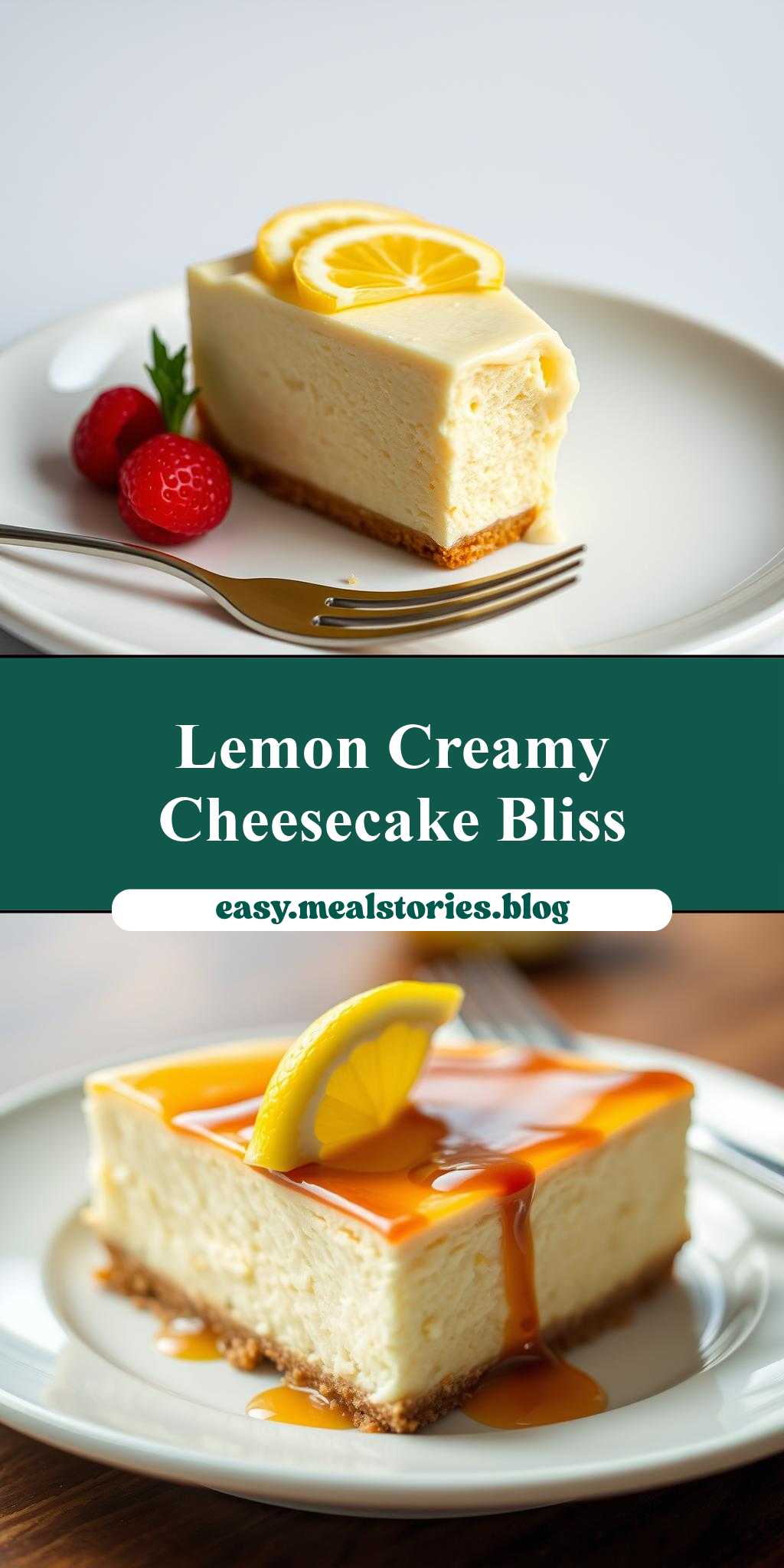
What makes the perfect spring dessert? A refreshing lemon bliss cheesecake with a homemade graham cracker crust and a tangy lemon curd topping, made easy with a quick water bath method, save this idea for your next family favorite dinner party
Lemon Bliss Cheesecake
Introduction
The Lemon Bliss Cheesecake is a masterpiece of simplicity and flavor, combining the brightness of lemon with the richness of cheesecake. What makes this dessert truly special is its accessibility – using everyday ingredients, you can create a show-stopping dessert that’s perfect for any occasion. The beauty of this recipe lies in its ease of preparation and the impressive results it yields with minimal effort. Whether you’re a seasoned baker or just starting out, this Lemon Bliss Cheesecake is sure to become a favorite, offering a delightful harmony of textures and tastes that will leave everyone wanting more.
Why This Works
- Flavor balance and ingredient accessibility: The combination of lemon zest, lemon juice, and a hint of vanilla creates a perfectly balanced flavor profile that’s both refreshing and decadent. The ingredients are easily found in most grocery stores, making this cheesecake accessible to everyone.
- Ease of preparation: Despite its impressive presentation, the Lemon Bliss Cheesecake is surprisingly easy to make. The steps are straightforward, and the ingredients are simple to prepare, making it a great option for those looking to impress without spending hours in the kitchen.
- Impressive results with minimal effort: The end result is a beautiful, professional-looking dessert that’s sure to impress friends and family. The combination of a smooth cheesecake, a tangy lemon curd, and a crunchy graham cracker crust creates a delightful textural experience that elevates this dessert to the next level.
Key Ingredients
The main ingredients in this Lemon Bliss Cheesecake include a graham cracker crust made with graham cracker crumbs, sugar, and melted butter; a cheesecake filling made with cream cheese, granulated sugar, eggs, lemon zest, lemon juice, and vanilla extract; and a lemon curd made with lemon juice, sugar, eggs, and butter. Practical substitutions can be made for some ingredients, such as using gluten-free graham crackers for the crust or replacing the granulated sugar with a natural sweetener like honey or maple syrup. However, keep in mind that these substitutions may slightly alter the flavor and texture of the final product.
Instructions
- Step 1: Begin by preparing the graham cracker crust. In a medium bowl, mix together the graham cracker crumbs, sugar, and melted butter until well combined. Press the mixture into the bottom of a 9-inch springform pan and bake at 350°F for 10 minutes, then let cool completely.
- Step 2: Next, prepare the cheesecake filling. In a large mixing bowl, beat the cream cheese until smooth. Add the granulated sugar and beat until combined, followed by the eggs one at a time, beating well after each addition. Stir in the lemon zest, lemon juice, and vanilla extract. Pour the cheesecake batter into the prepared pan over the crust and smooth the top.
- Step 3: Bake the cheesecake at 325°F for 50-60 minutes or until the edges are set and the center is just slightly jiggly. Avoid overbaking, as this can cause the cheesecake to dry out. Once baked, let the cheesecake cool in the pan for 1 hour before running a knife around the edges and releasing the springform. Let the cheesecake cool completely on a wire rack.
- Step 4: Finally, prepare the lemon curd. In a medium saucepan, whisk together the lemon juice, sugar, eggs, and butter. Cook over medium heat, stirring constantly, until the mixture thickens and coats the back of a spoon. Strain the curd through a fine-mesh sieve into a bowl and let cool to room temperature. Once the cheesecake is completely cool, spread the lemon curd over the top and refrigerate for at least 4 hours or overnight before serving.
Handy Tips
- To ensure a smooth cheesecake, make sure all ingredients are at room temperature before starting. This includes the cream cheese, eggs, and butter.
- Avoid overmixing the cheesecake batter, as this can introduce air and cause the cheesecake to crack during baking.
- For a water bath, wrap the outside of the springform pan with foil and place it in a larger pan filled with hot water to about halfway up the sides of the springform. This helps maintain a consistent temperature and prevents cracking.
Heat Control
Heat control is crucial when baking the cheesecake and preparing the lemon curd. For the cheesecake, bake at 325°F to prevent the edges from cooking too quickly and to ensure the center sets properly. For the lemon curd, cook over medium heat, stirring constantly, until the mixture thickens. This should take about 10-15 minutes, and the curd should coat the back of a spoon when removed from the heat.
Crunch Factor
The crunch factor in this dessert comes from the graham cracker crust. To achieve the perfect crunch, make sure the crust is baked until it’s lightly browned and set. This provides a nice textural contrast to the smooth cheesecake and lemon curd. If desired, you can also add some toasted nuts or cookie crumbs on top of the cheesecake before serving for extra crunch.
Pro Kitchen Tricks
- To prevent the cheesecake from cracking, ensure it cools slowly and evenly. Avoid sudden temperature changes, and let it cool in the pan for an hour before releasing the springform.
- For a clean release, run a knife around the edges of the cheesecake before releasing the springform. This helps prevent the cheesecake from sticking to the pan and cracking as it’s removed.
- When making the lemon curd, whisk constantly to prevent the eggs from scrambling. If the curd does scramble, remove it from the heat immediately and whisk in a little hot water to thin it out before returning it to low heat and continuing to cook until it thickens.
Storage Tips
- The Lemon Bliss Cheesecake can be stored in the refrigerator for up to 5 days. Wrap it tightly in plastic wrap or aluminum foil to prevent drying out.
- For longer storage, the cheesecake can be frozen. Wrap it tightly in plastic wrap or aluminum foil and place it in a freezer-safe bag. Frozen cheesecake can be stored for up to 2 months. Thaw overnight in the refrigerator before serving.
- Leftover lemon curd can be stored in an airtight container in the refrigerator for up to 1 week. It can also be frozen for up to 3 months. Thaw frozen curd in the refrigerator overnight before using.
Gift Packaging Ideas
The Lemon Bliss Cheesecake makes a wonderful gift, especially when packaged beautifully. Consider placing slices in decorative jars or containers and topping them with a layer of lemon curd and some fresh berries. You can also wrap the cheesecake in cellophane or parchment paper and tie it with a ribbon for a more rustic look. For a more elegant presentation, place the cheesecake on a cake stand or platter and garnish with fresh flowers or greenery.
Flavor Variations
- Different spices: Add a pinch of cinnamon, nutmeg, or cardamom to the cheesecake batter for a unique twist on the traditional flavor.
- Creative toppings: Instead of lemon curd, try topping the cheesecake with a mixed berry compote, caramel sauce, or a sprinkle of powdered sugar.
- Ingredient swaps: Replace the graham cracker crust with a crust made from crushed cookies, such as chocolate sandwich cookies or wafers, for a different flavor profile.
Troubleshooting
- Texture problems: If the cheesecake is too dense, it may be overbaked. If it’s too soft, it may not be baked enough. Adjust the baking time as needed to achieve the perfect texture.
- Ingredient replacements: If you’re out of an ingredient, consider substitutions. For example, you can replace the lemon zest with lime zest for a different citrus flavor.
- Over/undercooking signs: Check the cheesecake frequently during the baking time to avoid overcooking. Signs of overcooking include cracking, a dark brown color, or a dry, crumbly texture. Undercooked cheesecake will be soft and jiggly in the center.
FAQs
- Can I freeze it? Yes, the Lemon Bliss Cheesecake can be frozen for up to 2 months. Wrap it tightly in plastic wrap or aluminum foil and place it in a freezer-safe bag. Thaw overnight in the refrigerator before serving.
- Is it gluten-free? The traditional recipe includes graham cracker crumbs, which contain gluten. However, you can make a gluten-free version by using gluten-free graham crackers or replacing the crust with a gluten-free alternative.
- Can I double the recipe? Yes, you can double the recipe to make a larger cheesecake. Just keep in mind that you’ll need to adjust the baking time accordingly. A larger cheesecake will take longer to bake, so check it frequently to avoid overcooking.
Conclusion
The Lemon Bliss Cheesecake is a versatile and delicious dessert that’s perfect for any occasion. With its bright, citrusy flavor and smooth, creamy texture, it’s sure to be a hit with friends and family. Don’t be afraid to experiment with different flavor variations and toppings to make the recipe your own. Whether you’re a seasoned baker or just starting out, this cheesecake is a great choice for anyone looking to impress without spending hours in the kitchen. So go ahead, give it a try, and enjoy the bliss of this lemony delight!
Lemon Bliss Cheesecake
A refreshing and decadent dessert combining the brightness of lemon with the richness of cheesecake, perfect for any occasion.
🥘 Ingredients
👩🍳 Instructions
-
1Prepare the graham cracker crust by mixing the crumbs, sugar, and melted butter. Press into a 9-inch springform pan and bake at 350°F for 10 minutes.
-
2Prepare the cheesecake filling by beating the cream cheese until smooth. Add the granulated sugar, eggs, lemon zest, lemon juice, and vanilla extract, beating until well combined.
-
3Pour the cheesecake batter into the prepared pan over the crust and smooth the top. Bake at 325°F for 50-60 minutes or until the edges are set and the center is just slightly jiggly.
-
4Prepare the lemon curd by whisking together the lemon juice, sugar, egg yolks, and melted butter. Cook over medium heat, stirring constantly, until the mixture thickens and coats the back of a spoon.