
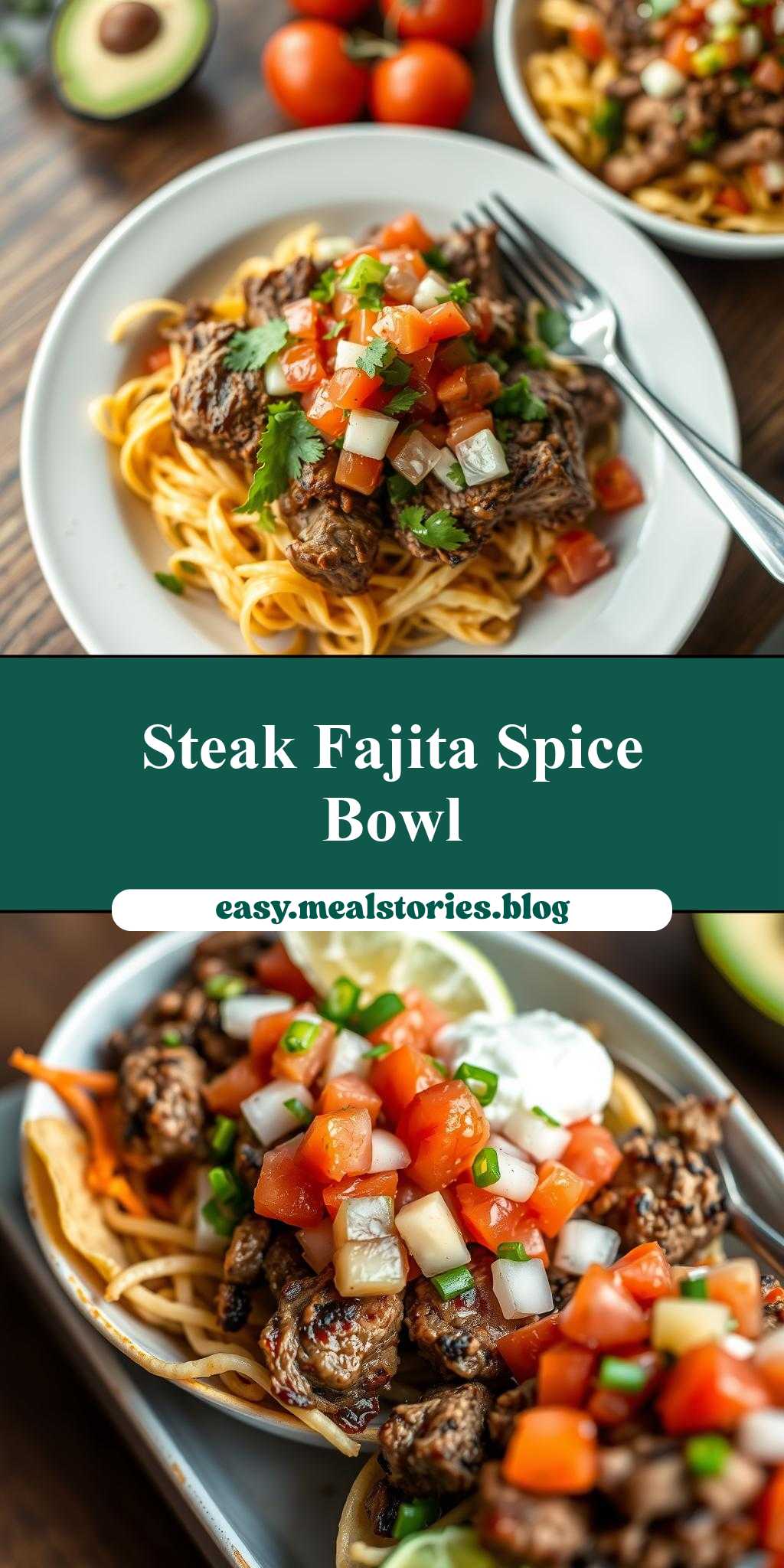
What makes a weeknight dinner truly unforgettable? For me, it’s the sizzle of a homemade steak fajita bowl filled with tender beef and fresh pico de gallo, all made easy with quick sauteing methods. Save this idea for your next family favorite meal.
Steak Fajita Bowls with Pico de Gallo
Introduction
Imagine a dish that combines the vibrant flavors of Mexico with the simplicity of a weeknight dinner, all in one bowl. Steak Fajita Bowls with Pico de Gallo are not just a meal; they’re an experience. With the ease of using everyday ingredients and the creativity to make it your own, this recipe is a perfect blend of flavor, texture, and fun. Whether you’re a seasoned chef or a culinary newbie, this dish promises to deliver impressive results with minimal effort, making it a staple for any occasion.
Why This Works
- Flavor balance and ingredient accessibility: The combination of tender steak, crunchy vegetables, and fresh pico de gallo creates a symphony of flavors and textures that is both accessible and exciting.
- Ease of preparation: With straightforward steps and readily available ingredients, this recipe simplifies the cooking process without sacrificing taste or presentation.
- Impressive results with minimal effort: The vibrant colors and aromatic flavors of the dish make it perfect for entertaining, while the ease of preparation keeps it realistic for busy days.
Key Ingredients
The main ingredients for Steak Fajita Bowls with Pico de Gallo include steak (preferably flank steak or skirt steak for its robust flavor and tender texture), bell peppers, onions, garlic, fresh cilantro, lime juice, and tomatoes for the pico de gallo. Practical substitutions can be made with other types of steak or by using different colored bell peppers for varying levels of sweetness. For those who prefer a vegetarian option, portobello mushrooms can be a delicious substitute for steak, offering a meaty texture that absorbs flavors well.
Instructions
- Step 1: Begin by prepping your ingredients. Chop the bell peppers and onions into thin strips, mince the garlic, and slice the steak into thin strips as well. For the pico de gallo, dice the tomatoes, onion, and cilantro, and squeeze a lime for fresh juice.
- Step 2: Cook the steak and vegetables. Heat a large skillet over medium-high heat, add a tablespoon of olive oil, and cook the steak until it’s browned and cooked to your desired level of doneness. Remove the steak from the skillet and set it aside. Then, add another tablespoon of olive oil if necessary, and sauté the bell peppers and onions until they’re tender and slightly charred.
- Step 3: Layer the flavors and textures. In a large bowl, place a portion of cooked steak, add a spoonful of sautéed bell peppers and onions on top, and finish with a dollop of fresh pico de gallo. The pico de gallo is made by mixing the diced tomatoes, onion, cilantro, garlic, and a squeeze of lime juice in a bowl.
- Step 4: Final touches and plating. Serve the fajita bowls hot, garnished with additional cilantro if desired, and accompanied by warm flour or corn tortillas on the side for a more traditional fajita experience. Consider adding other toppings such as sour cream, salsa, shredded cheese, or diced avocado to make the dish even more vibrant and satisfying.
Handy Tips
- For the best flavor, use high-quality ingredients, especially when it comes to the steak and fresh produce. Fresh cilantro and lime juice make a significant difference in the taste of the pico de gallo.
- Consider marinating the steak in a mixture of lime juice, olive oil, and your choice of spices for at least 30 minutes before cooking to enhance the flavor and tenderness.
- Don’t overcook the steak or the vegetables. The steak should be cooked to your desired level of doneness, and the vegetables should retain a bit of crunch for texture contrast.
Heat Control
Heat control is crucial when cooking the steak and vegetables. For the steak, cook over medium-high heat to achieve a nice sear on the outside, which helps lock in the juices. For the vegetables, medium heat is often sufficient to cook them through without burning, especially if they’re sliced thin. The ideal internal temperature for steak varies by desired doneness: 130°F – 135°F for medium-rare, 140°F – 145°F for medium, and 150°F – 155°F for medium-well or well-done.
Crunch Factor
Achieving the right crunch factor in your Steak Fajita Bowls is about balance. The pico de gallo should be fresh and crunchy from the diced vegetables, while the sautéed bell peppers and onions should still have a bit of texture but be tender enough to bite into easily. If you’re adding toppings like diced avocado or sour cream, they’ll add a creamy contrast to the crunchy elements.
Pro Kitchen Tricks
- Use a cast-iron skillet for cooking the steak and vegetables, as it retains heat well and can achieve a nice sear on the steak.
- Prepare ingredients in advance. Chopping the vegetables and making the pico de gallo ahead of time can save you time during the cooking process.
- Don’t overcrowd the skillet. Cook the steak and vegetables in batches if necessary, to ensure everything cooks evenly and doesn’t steam instead of sear.
Storage Tips
- Leftover steak and vegetables can be stored in the refrigerator for up to 3 days. Reheat them in a skillet or in the microwave until warmed through.
- Pico de gallo is best made fresh but can be stored in the refrigerator for up to a day. Give it a good stir before using, and adjust the seasoning if necessary.
- Consider using airtight containers for storing leftovers to keep them fresh and prevent mixing of flavors.
Gift Packaging Ideas
While Steak Fajita Bowls are more of a serve-and-enjoy dish, components like pico de gallo can be gifted. Consider packaging the pico de gallo in a decorative jar, wrapped with a ribbon and a gift tag that includes the recipe or serving suggestions. For a more substantial gift, prepare a fajita kit with pre-cooked steak, sautéed vegetables, warm tortillas, and a jar of pico de gallo, all neatly arranged in a basket or container.
Flavor Variations
- Different spices: Experiment with various spice blends like fajita seasoning, cumin, chili powder, or smoked paprika to give your steak and vegetables a unique flavor.
- Creative toppings: In addition to the classics like sour cream, salsa, and avocado, consider grilled or roasted vegetables, pickled onions, or a sprinkle of queso fresco for added flavor and texture.
- Ingredient swaps: For a vegetarian version, use portobello mushrooms as mentioned, or try using chicken or shrimp for a different protein option. Different types of peppers, like poblano or Anaheim, can also add unique flavors to the dish.
Troubleshooting
- Texture problems: If your steak is too tough, it might be overcooked. Aim for the right internal temperature, and let the steak rest before slicing. For vegetables that are too soft, try cooking them for a shorter time or at a higher heat to preserve crunch.
- Ingredient replacements: If you can’t find flank steak, skirt steak or even ribeye can work well. For the pico de gallo, use lemon juice as a substitute for lime juice if necessary, though lime is preferred for its flavor.
- Over/undercooking signs: Pay attention to the color and texture of your steak and vegetables. Steak should be browned on the outside and cooked to your desired level of doneness inside. Vegetables should be tender but still crisp, with a slight char if cooked correctly.
FAQs
- Can I freeze it? Yes, cooked steak and vegetables can be frozen for up to 2 months. However, it’s best to freeze them separately and reheat as needed. Pico de gallo is not recommended for freezing as it becomes watery upon thawing.
- Is it gluten-free? Yes, this recipe is naturally gluten-free, making it a great option for those with gluten intolerance or preference. Just be sure to check the ingredients of any store-bought items like tortillas or seasonings.
- Can I double the recipe? Absolutely, this recipe can be easily doubled or tripled for larger groups. Just adjust the cooking time slightly for the steak and vegetables to ensure everything is cooked through.
Conclusion
Steak Fajita Bowls with Pico de Gallo are a culinary delight that combines simplicity with sophistication, making them perfect for any meal. With its vibrant flavors, textures, and the freedom to customize, this dish is sure to become a favorite. Don’t be afraid to experiment with different ingredients and spices to make it your own, and enjoy the process of creating something delicious and satisfying. Whether you’re cooking for one or a crowd, this recipe promises to deliver on flavor, ease, and enjoyment, making it a must-try for anyone looking to spice up their meal routine.
Steak Fajita Bowls with Pico de Gallo
A flavorful and easy-to-make dish combining tender steak, crunchy vegetables, and fresh pico de gallo, perfect for any occasion.
🥘 Ingredients
👩🍳 Instructions
-
1Prepare ingredients by chopping the bell peppers, onions, and cilantro, and slicing the steak into thin strips.
-
2Cook the steak in a skillet over medium-high heat until browned and cooked to desired doneness. Remove and set aside.
-
3In the same skillet, add the sliced onions and bell peppers and cook until tender, adding garlic towards the end.
-
4Make the pico de gallo by mixing diced tomatoes, onion, cilantro, garlic, and lime juice in a bowl. Season to taste.
-
5Assemble the fajita bowls by placing cooked steak, sautéed vegetables, and a dollop of pico de gallo in a bowl. Serve with warm tortillas on the side.